By Tech Review Team | February 12, 2026
In the fiercely competitive landscape of mid-range smartphones, Xiaomi’s Redmi Note series has long been the bellwether for value. Year after year, it defines what consumers should expect for under $500. With the release of the Xiaomi Redmi Note 15 Pro 5G in January 2026, the company hasn’t just iterated; they have arguably redefined the durability and battery standards for the segment.
Announced in late 2025 and hitting shelves globally on January 6, 2026, this device (Model 25060RABDG) arrives with a spec sheet that reads like a flagship from two years ago, paired with rugged credentials that would make a construction-site phone jealous. However, potential buyers must navigate a confusing naming scheme—this Global 5G model is distinct from the Chinese variant and the lower-tier 4G version.
At a price point of approximately $405 (€399), does the Redmi Note 15 Pro 5G hold onto the crown? Let’s dissect every inch of this device to find out.
1. Design and Durability: Built Like a Tank, Dressed Like a Gentleman
The most headline-grabbing feature of the Redmi Note 15 Pro 5G isn’t its camera or processor—it is its build quality. Xiaomi has pushed the envelope of mainstream smartphone durability with this release.
The IP69K Revolution
For years, IP68 (submersion in 1.5m of water) was the gold standard. The Redmi Note 15 Pro 5G shatters this ceiling with an IP68/IP69K rating. The “9K” designation means this phone is not just waterproof; it is resistant to high-pressure, high-temperature water jets. It is dust-tight and can withstand immersion up to 1.5 meters for 30 minutes, with manufacturer testing claiming survival at 2 meters for up to 24 hours.
Furthermore, the device boasts drop resistance up to 2.5 meters. This level of ruggedness is typically reserved for bulky, rubber-clad “rugged phones,” yet Xiaomi has packed it into a sleek chassis measuring just 8mm thick and weighing 210g.
Materials and Aesthetics
The phone feels premium in the hand. The front is protected by Corning Gorilla Glass Victus 2, a top-tier material usually found on devices twice the price. The back comes in two textures depending on the colorway: a traditional silicone polymer (eco-leather) or a smooth plastic. While the frame remains plastic—a necessary concession to keep costs down—the overall construction feels dense and substantial.
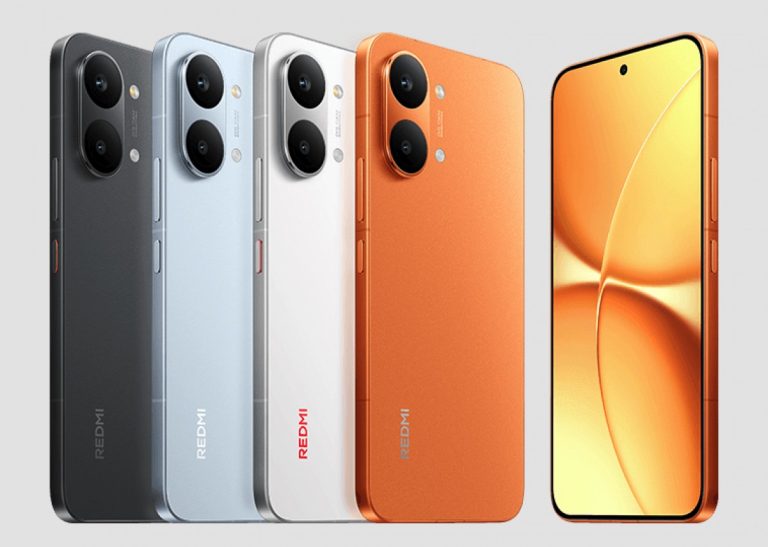
It is available in four distinct colors:
-
Black: Classic and understated.
-
Glacier Blue: A cool, icy tone.
-
Mist Purple: A soft, pastel option.
-
Titanium: A trendy metallic finish (likely plastic imitating metal).
2. Display: A Visual Feast
The screen has always been a strong suit for the “Pro” Redmi models, and the 15 Pro is no exception. It sports a massive 6.83-inch AMOLED panel that dominates the front of the device with an ~89.7% screen-to-body ratio.
Brightness and Clarity
The resolution stands at 1280 x 2772 pixels, providing a crisp density of approximately 447 ppi. However, the real star is the brightness. With a peak brightness of 3200 nits and a measured maximum of 1901 nits in testing, this display is legible even under the harsh midday desert sun. Whether you are navigating via GPS or watching HDR content on the beach, visibility will never be an issue.
Fluidity and Eye Care
Gamers and scrollers will appreciate the 120Hz refresh rate, ensuring fluid animations. The panel supports 68 billion colors, HDR10+, and Dolby Vision, making it a portable cinema. Crucially for those who use their phones in low light, Xiaomi has implemented 3840Hz PWM dimming. This high-frequency dimming significantly reduces eye strain and flickering at low brightness levels, a feature often overlooked in spec sheets but vital for daily comfort.
3. Performance: The Dimensity Engine
Under the hood, the Redmi Note 15 Pro 5G is powered by the MediaTek Dimensity 7400 Ultra, fabricated on a 4 nm process.
CPU and Gaming
The Octa-core CPU configuration includes four high-performance Cortex-A78 cores clocked at 2.6 GHz and four efficiency Cortex-A55 cores at 2.0 GHz. Paired with the Mali-G615 MC2 GPU, this chipset strikes a balance between raw power and thermal efficiency.
In benchmark tests, the device scored 652,862 on AnTuTu (v10) and 2,913 on GeekBench (v6). While these numbers won’t worry the latest Snapdragon 8 Gen series, they represent solid mid-range performance. It handles daily multitasking, social media apps, and 4K video playback with ease. Gaming performance is respectable, achieving a 3DMark Wild Life Extreme score of 1005, meaning it can run modern titles like Genshin Impact or Call of Duty Mobile at medium-to-high settings without melting in your hands.
Memory and Storage
Xiaomi has finally moved to UFS 2.2 storage across the board. While UFS 3.1 or 4.0 would have been preferred for faster read/write speeds, UFS 2.2 is adequate for this price tier. The configurations are generous:
-
256GB storage with 8GB or 12GB RAM
-
512GB storage with 8GB or 12GB RAM
Note: There is no microSD card slot. Users must choose their storage wisely at purchase, as expansion is impossible.
4. Software: Future-Proofing
The phone launches with Android 15 skinned with Xiaomi’s latest HyperOS 2. HyperOS is a refined, lighter evolution of MIUI, focusing on better interconnectivity with Xiaomi’s ecosystem of tablets and smart home devices.
Perhaps the most reassuring spec is the software support promise: up to 4 major Android upgrades. This means the Redmi Note 15 Pro 5G should technically receive Android 19, keeping it relevant and secure well into 2030. This level of support was previously the domain of Samsung and Google, and it’s excellent to see Xiaomi matching it in the mid-range sector.
5. Camera: The 200MP Question
The camera island on the back is dominated by a massive primary sensor, but the supporting cast is minimal.
Main Camera: 200 MP
The primary shooter is a 200 MP sensor with an f/1.7 aperture and a large 1/1.4″ sensor size. It utilizes multi-directional PDAF (Phase Detection Auto Focus) and OIS (Optical Image Stabilization).
-
Performance: In daylight, the pixel-binning technology (combining multiple pixels into one) produces 12.5MP or 50MP images with incredible detail and dynamic range. The OIS helps keep low-light shots steady and video smooth.
-
Zoom: While there is no dedicated telephoto lens, the high megapixel count allows for decent “in-sensor” zoom (2x or 4x lossless crop), which effectively bridges the gap for portrait shots.
The Ultra-Wide and Selfie
Supporting the main camera is a modest 8 MP Ultra-wide lens (f/2.2). It captures a 120-degree field of view, ideal for landscapes, though it lacks the sharpness of the main sensor. On the front, a 20 MP selfie camera handles video calls and social media snaps, supporting HDR and 1080p video at 60fps.
Video Capabilities
Content creators will be pleased with 4K video recording at 30fps and 1080p up to 120fps for slow-motion edits. The inclusion of gyro-EIS (Electronic Image Stabilization) alongside OIS ensures that handheld vlogging remains stable and watchable.
6. Battery Life: Silicon-Carbon Innovation
One of the most exciting “hidden” upgrades in the Redmi Note 15 Pro 5G is the battery technology. It utilizes a Si/C (Silicon-Carbon) Li-Ion battery.
Why Si/C Matters
Traditional lithium-ion batteries use graphite anodes. Silicon-carbon anodes can hold significantly more energy in the same physical space. This allows Xiaomi to pack a massive 6580 mAh battery into a phone that is only 8mm thick.
Endurance and Charging
-
Endurance: The lab tests confirm the benefits. With an Active Use Score of 15 hours and 27 minutes, this phone is a marathon runner. It achieved a massive 60 hours and 50 minutes in endurance talk-time testing. For the average user, this is easily a “two-day phone.”
-
Charging: Wired charging tops out at 45W. While not the 120W HyperCharge seen on previous “Pro Plus” models, it balances speed with battery health preservation. It also supports 22.5W reverse wired charging, effectively turning your phone into a power bank for your earbuds or a friend’s dying phone.
7. Connectivity and Audio
The phone is future-ready regarding connectivity:
-
5G: Full support for modern 5G bands.
-
Wi-Fi 6: For fast home networking.
-
Bluetooth 5.4: The latest standard for low-latency audio and stable connections.
-
NFC: Available (region dependent) for contactless payments.
-
IR Blaster: A classic Xiaomi feature, allowing you to use the phone as a TV remote.
Audio: The device features stereo speakers with Dolby Atmos support, delivering a Loudspeaker score of -21.1 LUFS, rated as “Excellent.” The sound is loud, rich, and immersive. However, audio purists will mourn the absence of a 3.5mm headphone jack, forcing users to rely on the USB-C port or Bluetooth.
8. Verdict: The New King of Utility?
The Xiaomi Redmi Note 15 Pro 5G is a fascinating pivot for the series. It steps away from the “raw performance per dollar” race and focuses heavily on utility, longevity, and endurance.
Pros:
-
Best-in-class durability: IP69K and 2.5m drop resistance is a game-changer for clumsy users or those with active lifestyles.
-
Battery Life: The 6580 mAh Si/C battery provides incredible screen-on time.
-
Display: A flagship-grade AMOLED screen with high brightness and eye protection.
-
Software Support: 4 years of Android updates adds significant value.
Cons:
-
Mediocre Secondary Cameras: The 8MP ultrawide is aging, and there is no telephoto lens.
-
No MicroSD Slot: Storage expansion is missed in this price bracket.
-
Charging Speed: 45W is decent, but slower than some competitors offering 67W or 100W.
About the Author