The technology world moves at a blistering pace. No sooner has the latest iPhone landed in the hands of eager consumers than the rumor mill begins churning about what lies two or three years down the road. This relentless cycle isn’t just about impatience; it’s about fascination with the trajectory of personal computing.
The iPhone isn’t just a phone anymore. It is our primary camera, our wallet, our map, our entertainment hub, and our connection to the world. Therefore, looking ahead to a device like the “iPhone 17 Pro Max” (a tentative name for the flagship expected around 2025) is an exercise in analyzing current technological trends, supply chain realities, and Apple’s long-term goals.
This article is a deep dive into what we can reasonably expect from this future device based on current industry direction. We will explore design potential, camera breakthroughs, the immense power of future silicon, and the increasingly central role of Artificial Intelligence.
iPhone 17 Pro Max Full review
Section 1: The Pursuit of the Perfect Slab
For nearly two decades, the ultimate goal of smartphone design has been simple: a single pane of intelligent glass that you can hold comfortably. Every iteration of the iPhone brings us slightly closer to this “all-screen” dream.
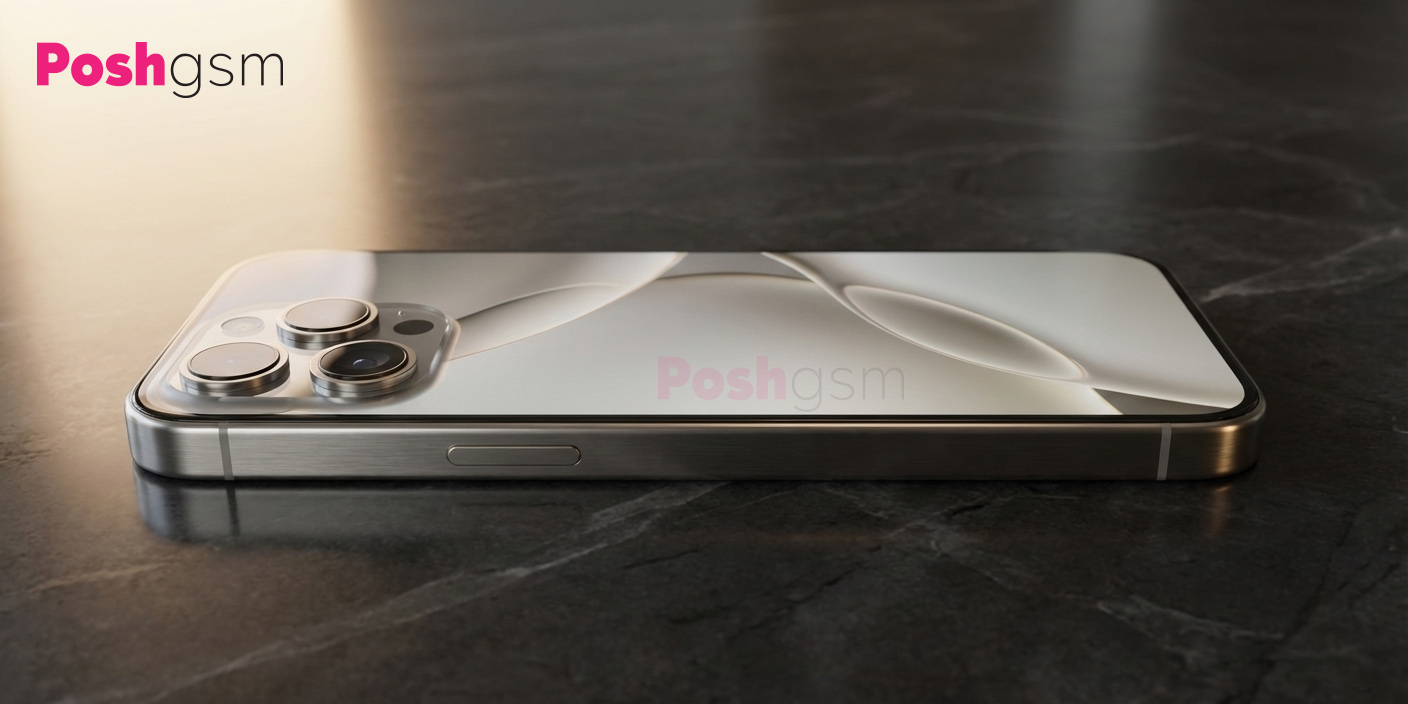
The iPhone 17 Pro Max is expected to represent a significant milestone in this journey. We are currently in an era of flat edges and titanium frames, design languages introduced with the iPhone 12 and refined with the iPhone 15 Pro. By the time the iPhone 17 arrives, this design language will be mature, perhaps ready for its final, perfected form before the industry potentially shifts toward foldable or rollable devices.
The Vanishing Bezel
The most immediately noticeable change in any new iPhone display is the bezel—the black border around the lit screen. Apple has been aggressively shrinking these borders.
For the iPhone 17 Pro Max, we anticipate bezels so thin they are almost imperceptible to the naked eye. This involves complex manufacturing processes where the display connections are tucked tightly underneath the active screen area. The result is an immersive experience where content appears to float right to the very edge of the titanium frame. This isn’t just for looks; it allows Apple to potentially increase the screen size slightly—perhaps pushing toward 6.9 inches diagonally—without making the actual phone physically larger or harder to hold.
The Under-Display Challenge
The biggest hurdle to the “perfect slab” design remains the necessary sensors on the front of the phone: the selfie camera and the complex TrueDepth system used for Face ID.
Current iPhones use the “Dynamic Island” to house these sensors. While an innovative software solution to a hardware problem, it is still an interruption on the screen. The industry goal is to move everything under the display.
Ideally, by the iPhone 17 Pro Max, Apple would implement under-display Face ID. This means the infrared sensors and dot projector used for facial recognition would live beneath the screen pixels, invisible to the user. When needed, they would shoot through the display gaps to scan your face.
The selfie camera is harder to hide without compromising photo quality. It is highly probable that the iPhone 17 Pro Max will still have a small circular cutout for the camera itself, even if the Face ID sensors are hidden. A fully invisible under-display camera that meets Apple’s high standards for quality might still be a generation or two away, as current iterations often result in slightly hazy or soft photos.
Section 2: The Visual Experience (Display Technology)
Apple’s “Pro” displays are already among the best in the industry, offering 120Hz refresh rates (ProMotion) and incredible color accuracy. So, how does the iPhone 17 Pro Max improve on near-perfection? The answer lies in efficiency and extreme brightness.
Winning the Brightness War
We use our phones everywhere, often under direct, harsh sunlight. The battleground for premium displays right now is peak brightness, measured in “nits.” Current high-end phones can hit 2,000 to 3,000 nits in short bursts for HDR content or outdoor viewing.
By the time the iPhone 17 launches, display panel technology (likely advanced OLED iterations supplied by Samsung or LG) could push these numbers even higher, perhaps reliably sustaining 3,000+ nits outdoors. This ensures that maps are perfectly readable on a beach at noon and that HDR movies watched on a plane look unbelievably vibrant.
The Efficiency Engine (LTPO)
A brighter screen usually means dead battery. To combat this, Apple uses LTPO (Low-Temperature Polycrystalline Oxide) technology. This allows the screen to adjust its refresh rate dynamically. It speeds up to 120Hz for smooth scrolling games, but slows all the way down to 1Hz (one refresh per second) when looking at a static photo or the Always-On display.
The iPhone 17 Pro Max will likely feature next-generation LTPO technology. This tech will be even faster at switching rates and more energy-efficient at lower settings, ensuring that the beautiful, bright screen doesn’t drain the battery prematurely.
Section 3: The Professional Camera System
For many users, the iPhone is bought primarily for its camera. The “Pro Max” model has historically been the vessel for Apple’s most significant photographic advancements, sometimes offering features not even found on the smaller Pro model.
The iPhone 17 Pro Max is expected to solidify the iPhone’s position as a viable alternative to dedicated professional cameras for many creators.
The Rise of Megapixels Across the Board
For years, Apple stuck to 12-megapixel sensors, focusing on sensor quality rather than pixel count. That changed recently with the move to a 48-megapixel main sensor.
By the iPhone 17 Pro Max, the expectation is parity across all lenses. We anticipate:
- A 48MP Main Wide Lens: With an even larger physical sensor to gather more light and reduce noise in dark environments.
- A 48MP Ultra-Wide Lens: This is crucial. Current ultra-wide lenses often suffer in low light compared to the main camera. A high-megapixel sensor here would allow for incredibly sharp, expansive landscapes and much better macro (close-up) photography.
- A 48MP Telephoto Lens: High resolution on the zoom lens means better digital cropping and sharper long-distance shots.
Mastering the Zoom
Optical zoom (using physical glass lenses rather than digital cropping) is the final frontier for smartphone cameras due to space limitations. You cannot easily fit a long lens inside a thin phone body.
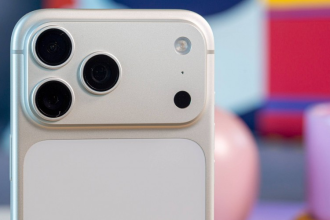
Apple solved this with “tetraprism” technology, folding the light path inside the phone like a periscope to achieve 5x optical zoom. The iPhone 17 Pro Max will likely push this further. We could see the optical zoom reach 10x, allowing for crisp shots of distant subjects—think wildlife or children playing across a sports field—without losing quality.
Crucially, Apple must ensure smooth transitioning between these lenses. The goal is a seamless zoom experience where the color and quality match perfectly as you zoom from 0.5x all the way to 10x.
Computational Photography: The Invisible Hand
Hardware is only half the story. Apple’s “secret sauce” is its image signal processing (ISP) and computational photography. Every time you press the shutter, the iPhone takes multiple instantaneous images at different exposures and merges them into a single, perfect photo.
With the increased power of the iPhone 17’s chip, this processing will become more sophisticated. We can expect:
- Better Semantic Rendering: The camera understands what it is looking at—sky, skin, hair, dog fur—and processes each element differently for maximum realism.
- Instant AI Edits: The ability to remove unwanted objects from the background of a photo instantly and flawlessly during the capture process, not just afterward.
Section 4: The Engine Room (Performance and Silicon)
At the heart of the iPhone 17 Pro Max will beat an Apple-designed chip, likely named the A19 Pro. Apple’s silicon team is widely considered the best in the business, consistently producing chips that are faster and more efficient than the competition.
The Race for Nanometers
Chip manufacturing is defined by “process nodes,” measured in nanometers (nm). The smaller the number, the smaller the transistors on the chip. Smaller transistors mean you can pack more of them into the same space, leading to better performance and, crucially, better energy efficiency.
Current leading-edge chips are on a “3nm” process. By the time the iPhone 17 arrives, the industry will likely have moved to the highly anticipated 2nm process.
What does this mean for the average user? It doesn’t just mean apps open a fraction of a second faster. A 2nm A19 Pro chip means:
- Console-Quality Gaming: The ability to play complex, graphically intense games (like Resident Evil or Death Stranding) without the phone overheating or draining the battery in an hour.
- Effortless Multitasking: Switching instantly between a video editor, a spreadsheet, and a dozen web tabs without any stutter.
Thermal Management: Staying Cool Under Pressure
Power means heat. If a processor gets too hot, it has to “throttle,” deliberately slowing down to prevent damage. This is the enemy of sustained performance.
The iPhone 17 Pro Max will need advanced thermal management. This could involve new internal structures, perhaps using graphene or advanced vapor chambers, to spread heat away from the chip and out through the titanium frame. This ensures that the phone stays fast even during a long gaming session or while exporting a 4K video.
Section 5: The Brain (Artificial Intelligence and iOS 19)
Hardware is useless without software. The iPhone 17 Pro Max will likely launch with iOS 19, an operating system defined by the deep integration of Generative AI.
While competitors like Google and Samsung are already heavily pushing AI features, Apple tends to wait until it can execute a technology perfectly and privatively.
The Neural Engine: AI on the Edge
A key part of the A19 Pro chip will be a vastly expanded “Neural Engine”—the part of the processor dedicated to AI tasks. Apple prefers to do as much AI processing as possible on the device itself, rather than sending your data to the cloud. This is faster and much better for privacy.
Siri Reborn
Siri has long lagged behind competitors in conversational ability. The iPhone 17 Pro Max should finally deliver the Siri we have always wanted. Instead of just setting timers or checking the weather, this new Siri—powered by a Large Language Model (LLM) running locally on the phone—could:
- Understand complex, multi-part requests (“Find the photos of my dog at the beach last year and email the best three to Mom”).
- Summarize long documents or email chains instantly.
- Generate distinct images or text based on prompts directly within Messages or Notes.
AI as a Creative Partner
Beyond an assistant, AI will become a tool for creation.
- Video Editing: Imagine asking your iPhone to “Create a 30-second highlight reel of my vacation video set to upbeat music,” and having it done in seconds.
- Photography: We might see features where the AI can convincingly change the lighting in a photo after it’s taken, changing a noon shot to the “golden hour.”
Section 6: Battery, Charging, and Connectivity
A powerful phone needs a powerful power source. The “Max” model always has the best battery life of the lineup due to its larger physical size, but users always want more.
Stacked Battery Technology
To fit more battery capacity into the same space, Apple is exploring “stacked battery” technology, similar to what is used in electric vehicles. This method layers battery internal components more densely. The result could be an iPhone 17 Pro Max that lasts not just a full day of heavy use, but perhaps a day and a half or two days of moderate use.
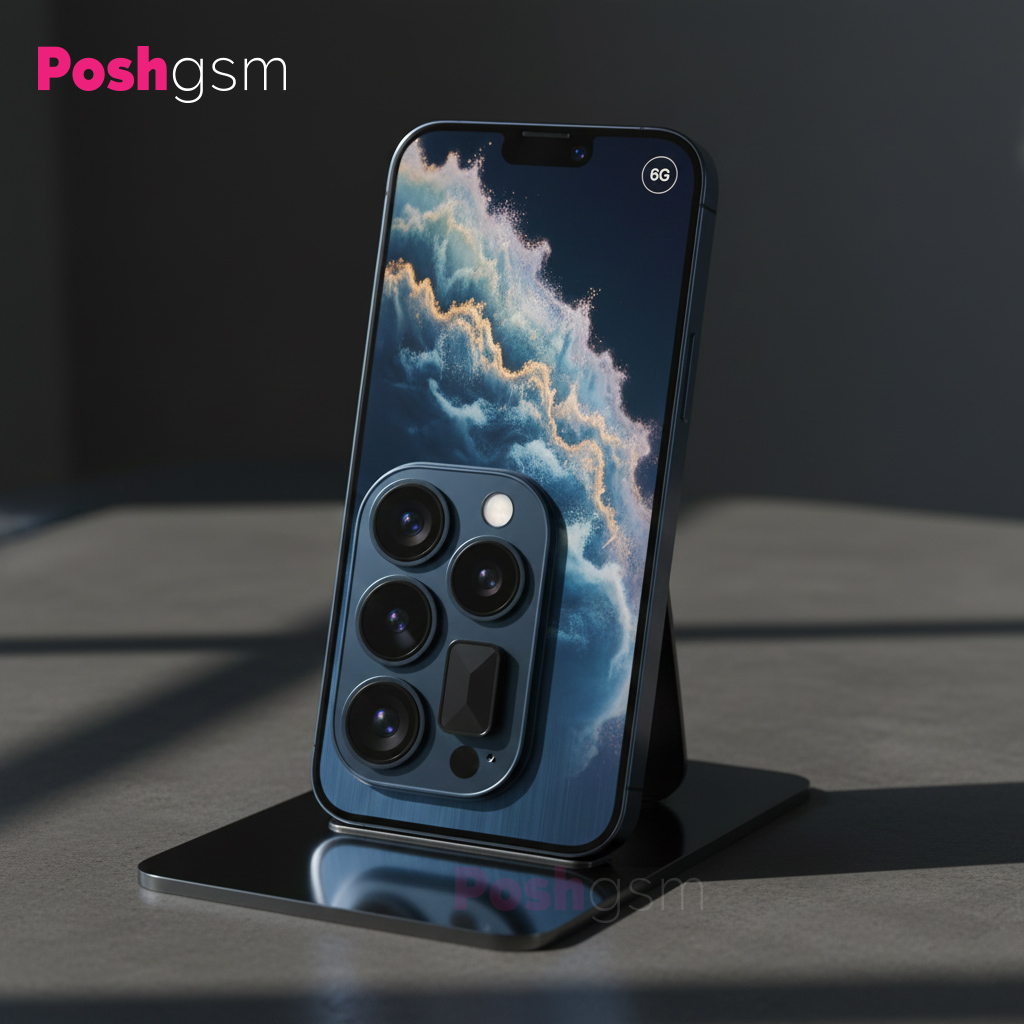
The Need for Speed (Charging)
While battery life is good, charging speed is an area where the iPhone currently trails some Android competitors. Some Android phones can charge from 0% to 100% in under 30 minutes.
The iPhone 17 Pro Max will likely adopt faster charging standards, potentially pushing wired charging speeds up to 45W or 60W via USB-C. This would allow for a substantial top-up—say, 50% battery—in just 15 or 20 minutes right before you leave the house.
MagSafe, Apple’s convenient magnetic wireless charging, will also likely see a speed boost, perhaps moving from the current 15W standard to 25W, making wireless charging nearly as fast as current wired charging.
Connectivity: Wi-Fi 7 and Beyond
The iPhone 17 Pro Max will be a future-proofed communication device. It will certainly support Wi-Fi 7, the newest standard that offers vastly increased speeds and lower latency, perfect for AR/VR applications and streaming high-resolution content in a crowded home network.
While “6G” cellular networks are still in the early research phase, the modem inside the iPhone 17 will be the most advanced 5G iteration available, focused on maintaining strong connections in weak signal areas and maximizing data throughput while using less power.
Conclusion: The Apex of Maturity
If the trajectory holds true, the iPhone 17 Pro Max will not be a device defined by one single, gimmicky feature. Instead, it will represent the apex of the current smartphone form factor—the ultimate refinement of the rectangular glass slab.
It will be a device where the hardware limitations finally step out of the way of the user’s intent. A screen so bright it fights off the sun; cameras so capable they replace professional gear; a chip so powerful it never stutters; and AI so integrated it acts as an extension of your own thought process.
Of course, this peak performance will come at a premium price. The “Pro Max” has always been an investment. But for those for whom the smartphone is the center of their digital lives—the power users, the creators, the professionals—the iPhone 17 Pro Max promises to be a tool of unparalleled capability, bridging the gap between the technology of today and the unimagined possibilities of tomorrow.