
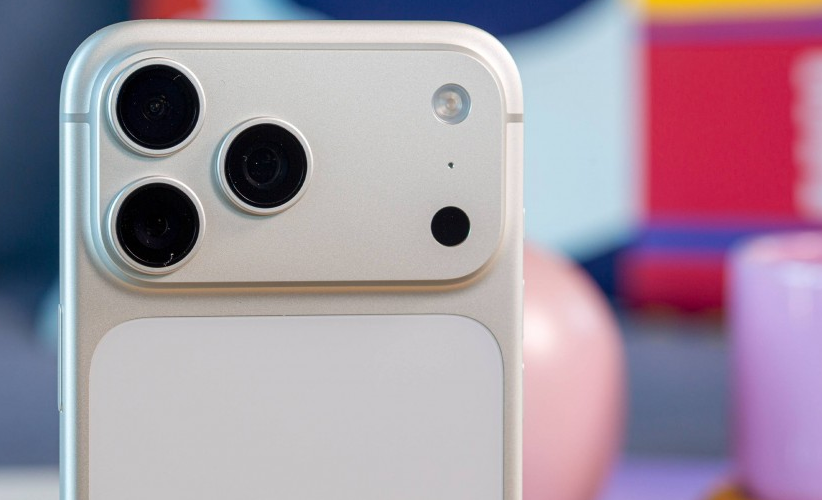
Recent supply chain rumors (as of early Jan 2026) suggest that Apple is exploring multispectral imaging sensors for future iPhone models. Unlike standard cameras that only “see” in Red, Green, and Blue (RGB), a multispectral sensor captures light across additional wavelength bands, including near-infrared.
While the technology is currently in an exploratory phase and likely years away from a commercial release, it could fundamentally change how iPhones “understand” the world.
How Multispectral Sensors Could Improve Your Photos
Rather than just adding megapixels, this technology focuses on the quality and depth of data the camera captures.
Advanced Material Detection: By analyzing how different materials reflect light across various wavelengths, the iPhone could distinguish between human skin, fabric, vegetation, and plastic with incredible precision. This would lead to much more natural “Portrait Mode” cutouts and skin tone rendering.
Enhanced “Visual Intelligence”: This sensor could act as a massive boost for Apple’s AI features. It would allow the device to identify objects and scenes more accurately by looking at their spectral signature, even in lighting conditions where a standard camera might struggle.
Superior Low-Light & Color Accuracy: By capturing light outside the visible spectrum, the camera could gather more data to reduce noise in dark environments and resolve tricky white balance issues caused by artificial lighting.
Invisible Improvements: This isn’t likely to be a “mode” you turn on. Instead, Apple would use the extra data in the background to refine computational photography, making every photo look more true-to-life.
The Realistic Timeline
According to reliable leakers like Digital Chat Station, Apple is currently evaluating components but hasn’t begun formal prototyping. This suggests:
iPhone 18 Pro: Unlikely to feature this tech. Rumors for this model currently focus on a variable aperture for the main lens and larger apertures for the telephoto camera.
iPhone 19 or later: This is the more realistic window for a multispectral sensor, as the hardware is complex and expensive to integrate into a slim smartphone body.
Other Camera Tech to Watch
While we wait for multi spectral sensors, Apple has recently patented other “disruptive” imaging tech, including:
20-Stop Dynamic Range: A June 2025 patent describes a sensor that could rival professional cinema cameras by using a “stacked” design to capture extreme light and dark details simultaneously.
Lateral Overflow Integration Capacitor (LOFIC): A technology already appearing in competitors’ phones that helps prevent “blown-out” highlights in bright sun.
Would you like me to look into the specific details of the variable aperture rumored for the iPhone 18 Pro?