
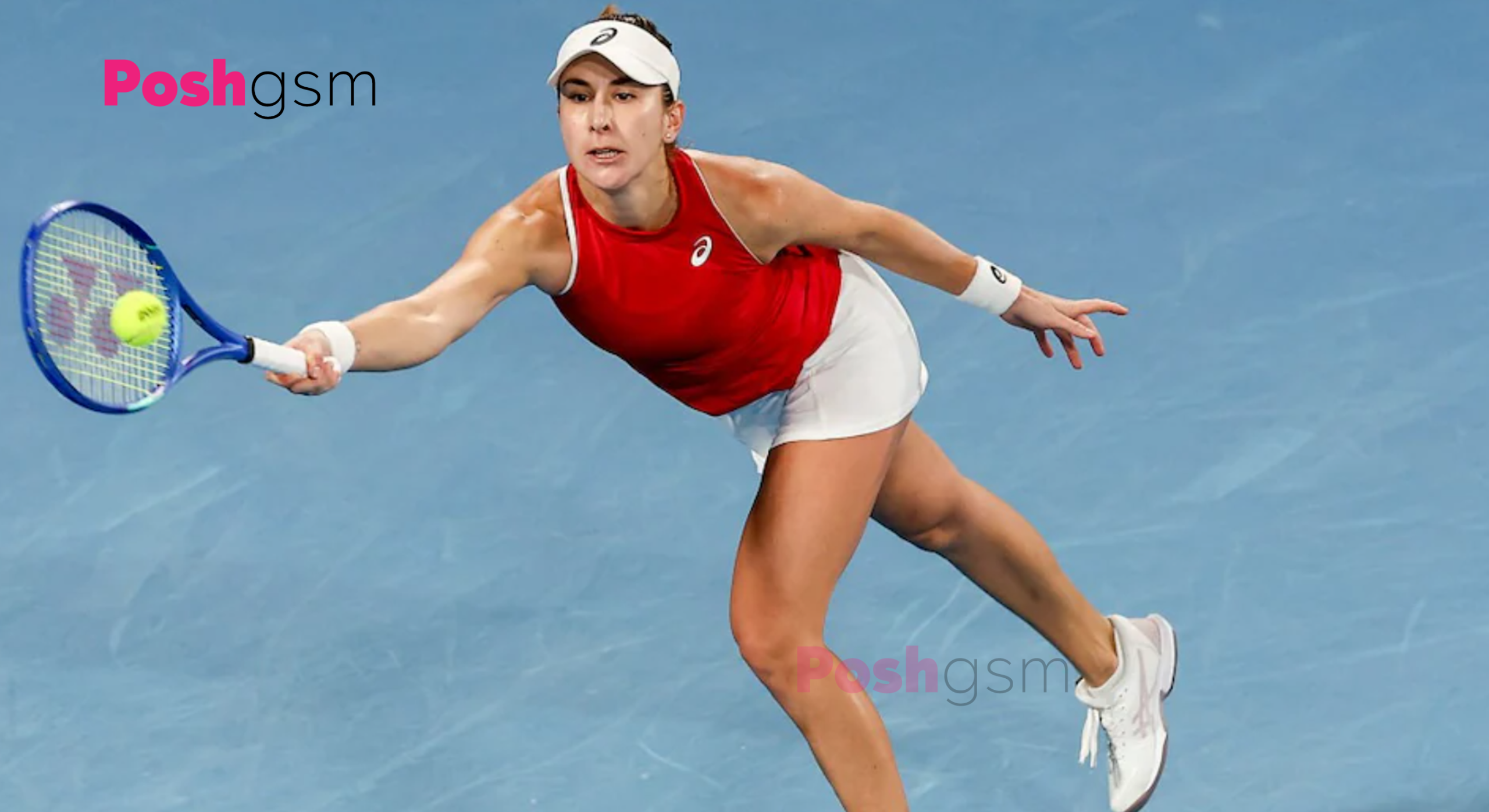
In the annals of tennis history, few players have ascended to the summit of the sport with the blend of quiet intensity, devastating power, and mental fortitude possessed by Iga Świątek. As the first Polish player to win a Grand Slam singles title and a dominant World No. 1, Świątek has not only rewritten the record books for her nation but has also established herself as the defining female player of her generation. By January 2026, her résumé boasts six Grand Slam titles—including a historic triumph at Wimbledon—an Olympic medal, and over 125 weeks atop the WTA rankings. This comprehensive guide explores the life, career, and enduring legacy of the athlete known affectionately as “1GA.”
Iga Świątek Polish tennis player
Early Life and Sporting DNA Born on May 31, 2001, in Warsaw, Poland, Iga Natalia Świątek was destined for athletic excellence. She is the younger daughter of Dorota, an orthodontist, and Tomasz Świątek, a former Olympic rower who competed in the men’s quadruple sculls at the 1988 Seoul Games. Tomasz was determined that his daughters, Iga and her older sister Agata, would become professional athletes, favoring individual sports where success lay squarely in their own hands.
While Agata initially pursued swimming before switching to tennis (later retiring due to injury), Iga followed her sister onto the court, driven by a competitive desire to beat her sibling. Growing up in Raszyn, a small town near Warsaw, Iga was an introvert who found her voice through her racket. She claimed she was not a natural talent in the traditional sense but rather a student of the game who relied on relentless work ethic and movement.
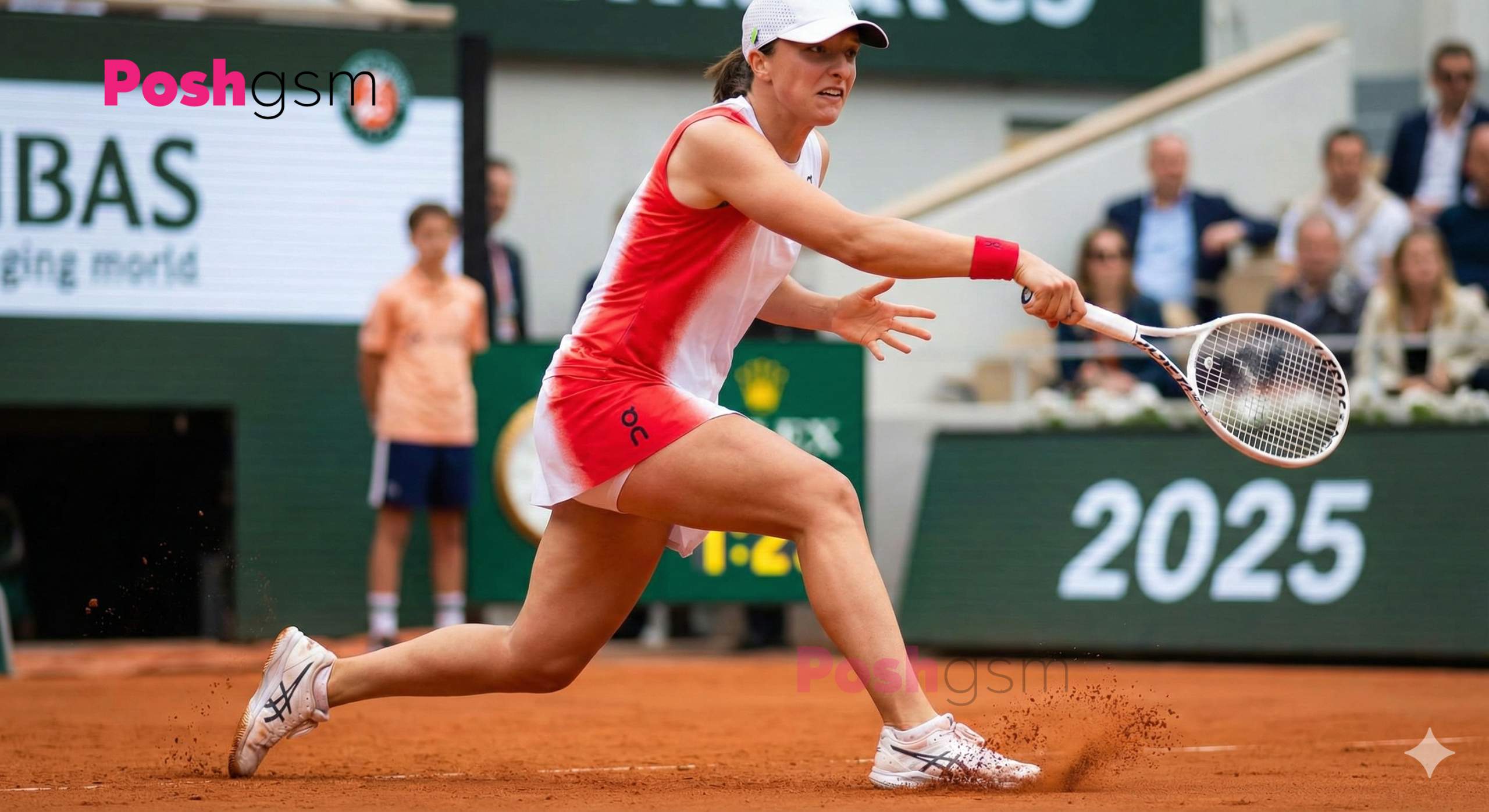
The Rise to Stardom: 2016–2020
Świątek’s junior career was a harbinger of her future dominance. She anchored Poland to a Junior Fed Cup victory in 2016 and capped her junior days with a Wimbledon girls’ singles title in 2018. Transitioning to the professional circuit, she rose rapidly, breaking into the Top 50 by 2019.
Her “big bang” moment arrived in the autumn of 2020. At the delayed French Open, a 19-year-old, unseeded Świątek stunned the world. playing with a fearlessness that belied her age, she tore through the draw without dropping a set, defeating top seed Simona Halep and eventually Sofia Kenin in the final. She became the lowest-ranked champion in Roland Garros history, introducing the world to her heavy, topspin-loaded forehand—a weapon that would soon become the most feared shot in women’s tennis.
Total Dominance: The “Streak” and World No. 1 (2022–2024)
Following the retirement of Ashleigh Barty in early 2022, Świątek ascended to the World No. 1 ranking—a position she would hold with an iron grip. The 2022 season became the “Year of Iga.” She embarked on a 21st-century record 37-match winning streak, collecting six consecutive titles including the “Sunshine Double” (Indian Wells and Miami) and her second French Open crown. She capped the year with her first hard-court major at the US Open.
Her dominance on clay earned her the moniker “Queen of Clay.” She successfully defended her French Open title in 2023 and again in 2024, joining legends like Justine Henin and Monica Seles in the pantheon of Roland Garros greats. The 2024 season also saw her claim a bronze medal at the Paris Olympics, a bittersweet achievement for a player who had eyed gold on her favorite surface, yet a testament to her consistency.
The 2025 Inflection Point: Wimbledon and Resilience
The 2025 season marked a pivotal evolution in Świątek’s narrative. Known primarily for her clay and hard-court prowess, critics often pointed to her struggles on grass. She silenced them emphatically in July 2025. Adapting her game with a flatter serve and more aggressive returns, she stormed to the Wimbledon title, defeating Amanda Anisimova in a double-bagel (6-0, 6-0) final—a scoreline that became her signature.
However, the year was not without turbulence. The season was described as a “rollercoaster,” marred by a late-season suspension related to a relentless anti-doping protocol issue that she eventually cleared, and a temporary dip in rankings that saw her finish the year at No. 2. These challenges, however, only highlighted her resilience. She rebounded in early 2026 by leading Poland to victory at the United Cup, signaling her intent to reclaim the top spot.
Playing Style and “Iga’s Bakery”
Świątek is an aggressive baseliner whose game is built on extreme athleticism and a forehand that generates men’s-tour levels of RPM (revolutions per minute).
-
The Forehand: Her western grip allows her to impart massive topspin, making the ball jump high off the court, pushing opponents back and opening up angles.
-
Movement: Her court coverage is often cited as the best in the world. She slides effectively on all surfaces, not just clay, allowing her to turn defensive positions into offensive winners.
-
The “Bagel” Factory: Świątek is famous for winning sets 6-0 (a “bagel”) or 6-1 (a “breadstick”). Her relentless focus means she rarely gives away free points, even when leading comfortably.
The Team: Mental Strength as a Weapon Unique among top players, Świątek travels with a full-time sports psychologist, Daria Abramowicz. This partnership has been credited as the cornerstone of her success. Świątek openly discusses the importance of mental health, visualization, and emotional regulation. In late 2024, she shook up her technical team, hiring famed coach Wim Fissette to bring a fresh perspective to her serve and grass-court game—a move that paid immediate dividends at Wimbledon 2025.
Endorsements and Philanthropy Off the court, Świątek has become a global marketing icon.
-
Sponsorships: She is the face of On (running shoes and apparel), having moved from Asics. Her portfolio includes Rolex, Porsche, Visa, LEGO, Lancôme, and Infosys. She was the first female tennis player to sign with Oshee, a Polish sports drink brand.
-
Philanthropy: In 2025, she launched the Iga Świątek Foundation, which focuses on providing scholarships to young athletes and promoting mental health resources for children in Poland. She has also been a vocal advocate for Ukraine, organizing exhibition matches to raise funds for war relief efforts.
Conclusion As of January 2026, Iga Świątek is more than just a tennis player; she is a national hero in Poland and a global ambassador for the sport. With six Grand Slam titles across three different surfaces, she has proven she is not a specialist, but a complete champion. At just 24 years old, her “Era” is far from over. Her combination of heavy hitting, tactical intelligence, and mental resilience suggests that she will be chasing—and likely breaking—records for the next decade. Whether she is sliding on the red clay of Paris or commanding the lawns of London, Świątek remains the gold standard of modern women’s tennis.
About the Author