
Freddie Mercury remains one of the most electrifying figures in the history of popular music. Born Farrokh Bulsara on September 5, 1946, in Stone Town, Zanzibar (now Tanzania), he would go on to conquer the world as the lead vocalist of the rock band Queen. Known for his four-octave vocal range and flamboyant stage persona, Mercury defied the conventions of a rock frontman, blending theatricality with raw power in a way that had never been seen before—and has arguably never been replicated since.
To understand the intense curiosity surrounding his private life, including the frequent questions about whether he had a daughter, one must first understand the man himself. Mercury was a study in contrasts: a shy, retiring man in private who transformed into a larger-than-life god of the arena the moment he stepped on stage. He wrote some of the most enduring anthems in history, including “Bohemian Rhapsody,” “Killer Queen,” “Somebody to Love,” “Don’t Stop Me Now,” and “We Are the Champions.” His performance at Live Aid in 1985 is widely cited by music critics and fans alike as the greatest live rock performance of all time.
Yet, despite his global fame, Mercury guarded his privacy fiercely. He rarely gave interviews and kept his inner circle tight. This air of mystery has only fueled speculation about his life in the decades since his untimely death from AIDS-related complications on November 24, 1991. Among the most persistent topics of fascination is his lineage: Did the rock icon leave behind a child?
The Question of a Daughter: Fact vs. Rumor
For the vast majority of the time since his death, the official historical record has been clear: Freddie Mercury had no acknowledged biological children. He never married (though he was engaged once) and did not raise a family in the traditional sense. However, the story is far more complex than a simple “no,” involving deep emotional bonds, godchildren, and recent biographical claims that have reignited the conversation.
1. The “Love of His Life”: Mary Austin
When people search for “Freddie Mercury’s daughter,” they often stumble upon the name Mary Austin. While she is not his daughter, her role in his life was so significant that she became the primary beneficiary of his estate, leading to confusion for casual observers.
Mercury met Mary Austin in 1969, before Queen hit the big time. They lived together for six years and were engaged to be married. Even after their romantic relationship ended—following Mercury’s revelation to her about his sexuality—their bond remained unbreakable. He famously referred to her as his “common-law wife,” stating in a 1985 interview, “All my lovers asked me why they couldn’t replace Mary, but it’s simply impossible. The only friend I’ve got is Mary, and I don’t want anybody else.”
Who Was Freddie Mercury?
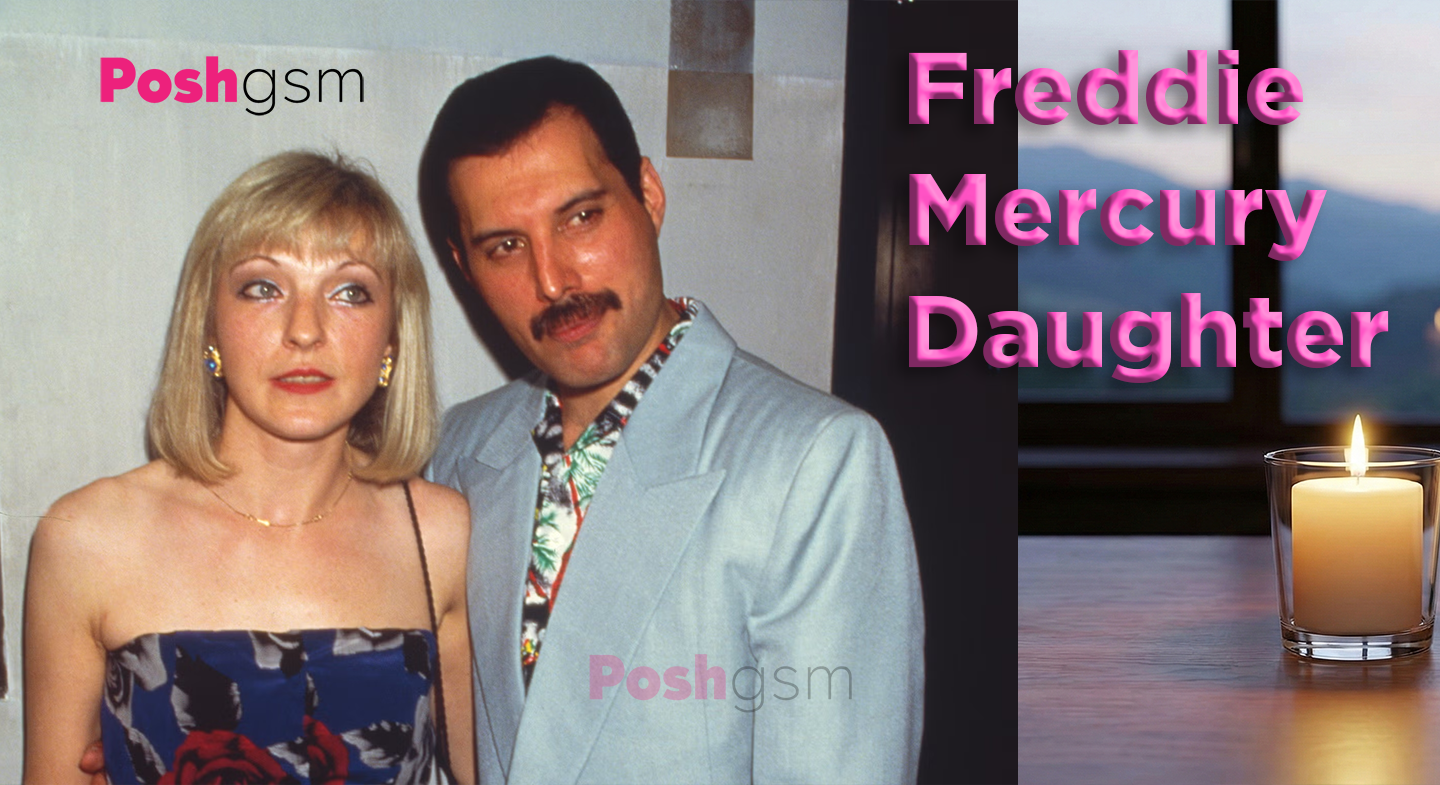
The woman known only as “B,” who claimed to be the secret daughter of Queen frontman Freddie Mercury, has passed away at the age of 48. Her husband, Thomas, announced on Thursday (January 15) that she died peacefully following a long battle with chordoma, a rare form of spinal cancer.
She is survived by her husband and their two sons, aged nine and seven.
A Final Tribute Paying tribute to his late wife, Thomas told the Daily Mail: “B is now with her beloved and loving father in the world of thoughts. Her ashes were scattered to the wind over the Alps.”
The Claims of Paternity “B” was born in 1976. It is alleged that she was conceived during a relationship between Mercury and the wife of one of his close friends. While reports suggest that only a handful of people within Mercury’s inner circle were aware of her existence, the singer allegedly visited her regularly and maintained a close bond with her until his death in 1991.
The narrative of this secret relationship was brought to public attention last year in the biography Love, Freddie: Freddie Mercury’s Secret Life and Love by Lesley-Ann Jones. The author claims to have seen proof supporting the assertion that Mercury fathered “B,” whom he affectionately called “Bibi.”
“Devoted” Father The biography includes a handwritten letter from “B” detailing her connection to the music icon. In it, she wrote:
“Freddie Mercury was and is my father. We had a very close and loving relationship from the moment I was born and throughout the final 15 years of his life. He adored me and was devoted to me. The circumstances of my birth may seem, by most people’s standards, unusual and even outrageous. That should come as no surprise. It never detracted from his commitment to love and look after me.”
When Mercury died, he left Austin his Georgian mansion in Kensington, Garden Lodge, and the vast majority of his fortune, including future recording royalties. In his will, he wrote that she would have been his wife had things turned out differently, and thus she was entitled to his legacy. This profound inheritance often leads to the misconception that she was a blood relative or that they had a child together who inherited the estate. In reality, Austin had two sons with another partner, one of whom (Richard) was Mercury’s godson.
2. The Godchildren
While he had no children of his own during his public life, Mercury was known to be very fond of children and served as a godfather to several.
-
Richard Austin: The eldest son of Mary Austin. Mercury was reportedly very close to him, teaching him to play piano and treating him like his own.
-
Freddie Mack: The son of Reinhold Mack, a German music producer who worked closely with Queen. Mercury spent considerable time with the Mack family in Munich, often sleeping on their couch and participating in family dinners. He became the godfather to their son, who was named after him.
These relationships were the closest Mercury came to fatherhood in the public eye. He was known to spoil his godchildren with extravagant gifts, channeling his paternal instincts into these chosen family bonds.
3. The 2025 Biography Claims: A “Secret Daughter”?
The narrative surrounding Mercury’s fatherhood shifted dramatically with the release of a biography in May 2025 titled Love, Freddie by Lesley-Ann Jones. This book introduced a controversial and startling claim: that Freddie Mercury fathered a secret daughter in 1976.
According to the claims made in the book, the child—referred to only as “B” to protect her privacy—was conceived during a brief affair Mercury allegedly had with the wife of a close friend. The biography asserts that Mercury was aware of the child and maintained a relationship with her, albeit in total secrecy, to protect her from the media circus that surrounded his life.
The author, Jones, claims that “B” approached her with 17 volumes of personal journals that Mercury had allegedly given to her. The narrative suggests a side of Mercury that was compartmentalized even from his bandmates: a father who, despite his chaotic lifestyle and touring schedule, tried to maintain a connection with his biological child.
Is this claim true? As of early 2026, these claims remain a subject of intense debate among historians and fans.
-
Skeptics point out that for nearly 35 years after his death, no concrete evidence of a child ever surfaced. Mercury’s will was meticulously detailed, providing for his parents, his sister Kashmira, Mary Austin, and his staff (including his partner Jim Hutton). The absence of a daughter in his will—or in the accounts of those who were with him 24/7 in his final days—casts doubt on the story.
-
Supporters of the claim argue that Mercury was a master of secrets. He successfully hid his HIV diagnosis from the public for years until the day before he died. If he wanted to protect a child from the ravages of fame, he certainly had the resources and the discretion to do so. The idea is that he may have provided for her financially outside of the will (via trusts) to avoid the public scrutiny that comes with probate.
The Man Behind the Myth
Whether or not the recent claims of a daughter are true, they highlight the enduring desire of the public to humanize Freddie Mercury. We look for a daughter because we want to see a continuation of his lineage, a spark of that unparalleled genius left behind on earth.
Freddie Mercury was a man of complex identity. Born a Parsi in East Africa, educated in India, and rising to fame in London, he straddled multiple worlds. He was a rock star who loved opera, a gay man who called a woman the love of his life, and a hedonist who collected fine Japanese art and koi carp.
He was also a man of immense courage. In an era when HIV/AIDS was a terrifying stigma, he continued to record music even as his body failed him. The final Queen album released during his lifetime, Innuendo, and the posthumous Made in Heaven, feature vocals recorded when he was in severe pain, yet his voice remained crystal clear and powerful. Tracks like “The Show Must Go On” and “Mother Love” stand as testaments to his sheer will and dedication to his craft.
Legacy
Ultimately, Freddie Mercury’s “children” were his songs. He once famously said, “I’m not going to be a star, I’m going to be a legend.” He achieved that and more. His influence is heard in generations of artists who followed, from Lady Gaga (who took her name from his song “Radio Ga Ga”) to Adam Lambert (who now tours with Queen).
While the story of a secret daughter named “B” adds a fascinating new layer to the mythology of Freddie Mercury in 2026, the verifiable truth remains that his family was the one he chose: Mary Austin, his bandmates, his loyal friends, and the millions of fans who keep his music alive. If he did indeed leave a biological child behind, he granted her the greatest gift a famous father could give: the gift of a private life, shielded from the blinding glare of his own stardom.
About the Author